

Boeing Starliner’s First Manned Launch Finally Takes Place
Under NASA’s Commercial Crew Program, Boeing Starliner and SpaceX Crew Dragon were selected as the two projects for transporting astronauts to the ISS. Following the commencement of the program, Boeing began working on the Starliner spacecraft. The Starliner project received $4.2 billion in support for the development phase. Facing some issues during the process, Boeing Starliner fell behind Crew Dragon. The first unmanned launch of Starliner took place in 2019 but ended in failure. In the 2022 launch, it successfully docked with the ISS. The first manned launch was scheduled for May 2024. The launch planned for May was canceled due to an issue with the Atlas V rocket. The next planned attempt was on June 1, but this was also canceled due to a problem with ground computers. 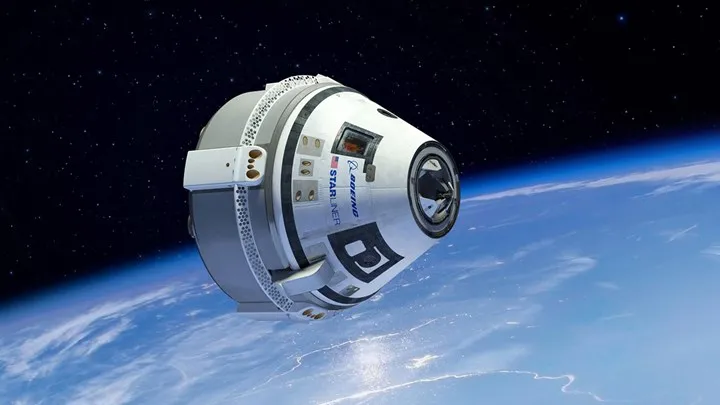 The third attempt on June 5 was successfully carried out at 17:52 Turkish time. The Starliner spacecraft, carrying NASA astronauts Butch Wilmore and Sunita Williams, successfully took off from Cape Canaveral, Florida, atop United Launch Alliance’s (ULA) Atlas V rocket and entered orbit. After a journey of approximately 24 hours, the spacecraft docked with the ISS. This successful launch tests Starliner’s launch, docking, and return operations. You can watch the launch below.
I am text block. Click edit button to change this text. Lorem ipsum dolor sit amet, consectetur adipiscing elit. Ut elit tellus, luctus nec ullamcorper mattis, pulvinar dapibus leo.
3D Printing of Metal on the ISS
NASA and ESA have been working on 3D printing technologies in space for years to find cheaper and more sustainable solutions for repairs and upgrades in space. This method offers significant advantages in terms of time and cost during the delivery of necessary parts to the ISS. A traditional plastic 3D printer has been present on the ISS since 2014. One of ESA’s goals is to recycle materials already in orbit, such as metals from old satellites. 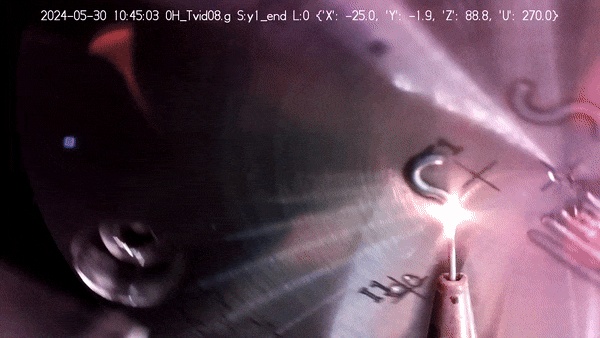 The 3D metal printer currently on the International Space Station was developed by a team led by Airbus under a contract from ESA’s Human and Robotic Exploration Directorate. The 180 kg printer reached the ISS in January 2024 and was installed in the ESA Columbus Module. The printer uses stainless steel wire as the printing material. A high-powered laser, millions of times more powerful than a laser pointer, heats and melts a small section of the wire to print the letter “S.” This printer is completely controlled from Earth. Astronauts on the ISS only need to open the nitrogen and ventilation valves before printing starts. The printer will next print four full-scale objects. These prints will then be sent back to Earth for analysis and comparison. Researchers hope to understand how the microgravity environment affects 3D printing.
This Week In Our Art Corner
The Right Stuff
The Right Stuff, directed by Philip Kaufman, is a film that tells the story of the birth of the United States’ space program and its first astronauts. Adapted from Tom Wolfe’s book of the same name, the film focuses on the Mercury Project initiated by the United States in the Space Race with the Soviet Union, and the stories of the seven brave astronauts involved in this project. The film begins with Chuck Yeager becoming the first person to break the sound barrier and chronicles the journey until John Glenn becomes the first American to orbit the Earth. It deeply explores the astronauts’ personal lives and family relationships, portraying them as individuals with weaknesses and human qualities. 