

A New Planet Potentially Suitable for Human Life Discovered
Scientists have discovered a new planet that could be suitable for human life. Named Gliese-12b, this planet is located approximately 40 light-years away from Earth and is roughly the same size as Venus. The detection of this planet, which orbits the star known as Gliese 12, was made using data from NASA’s TESS (Transiting Exoplanet Survey Satellite) and other observatories. Gliese-12b is situated in the Pisces constellation, about 40 light-years away, and orbits a cold red dwarf known as Gliese 12. The temperature on the planet hovers around 42 degrees Celsius, which is quite suitable for life on another planet. Gliese-12b completes an orbit around its star every 12.8 days. 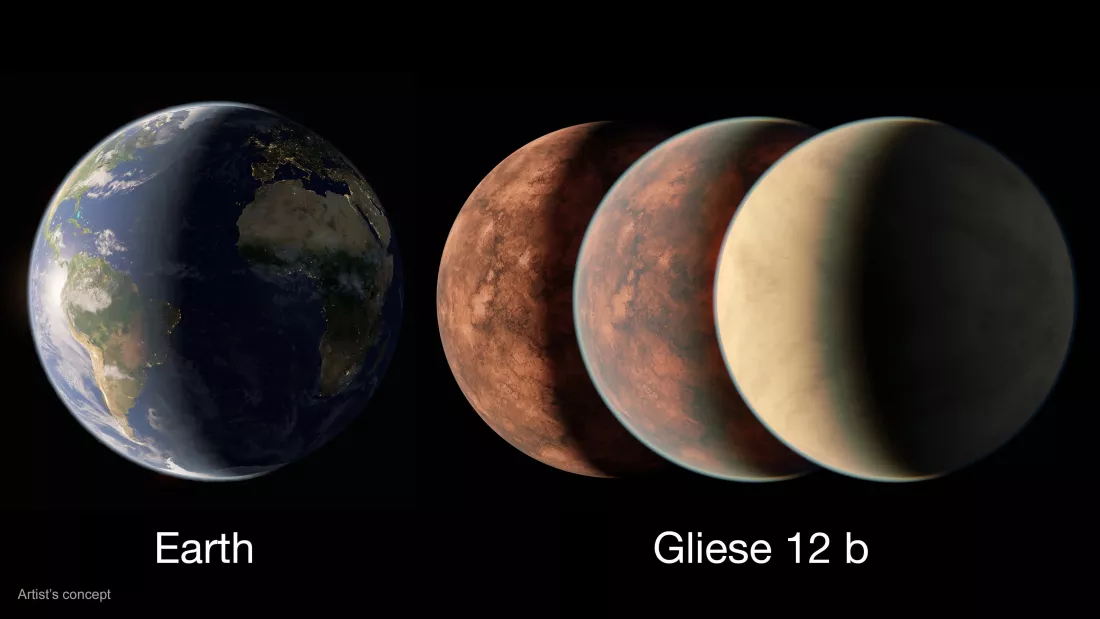
Scientists are still determining whether Gliese-12b has an atmosphere. Shiskir Dholakia, a doctoral student at the Center for Astrophysics at the University of Southern Queensland in Australia, stated that this planet is one of the best targets to study whether Earth-sized planets orbiting cold stars can retain their atmospheres. Articles about the newly discovered planet have been published in The Astrophysical Journal Letters and the Monthly Notices of the Royal Astronomical Society. For more detailed information, you can read the published article.
The Oldest Person to Go to Space: Ed Dwight
In Blue Origin’s latest manned space flight, 90-year-old Ed Dwight went to space, earning the title of “the oldest person to go to space.” Ed Dwight joined NASA in 1961 and underwent training. U.S. President John F. Kennedy had chosen Ed Dwight to be the country’s first black astronaut, but Dwight did not go to space at that time. Nearly 60 years later, he went to space just a few days ago. The flight, which lasted about 10 minutes, had a total of six passengers. After the flight, Ed Dwight described it as a “life-changing experience.” Upon exiting the capsule, he said, “Amazing! A life-changing experience. Everyone needs to do this. I didn’t think I really needed this in my life. But now, I know, and I’m so happy.” 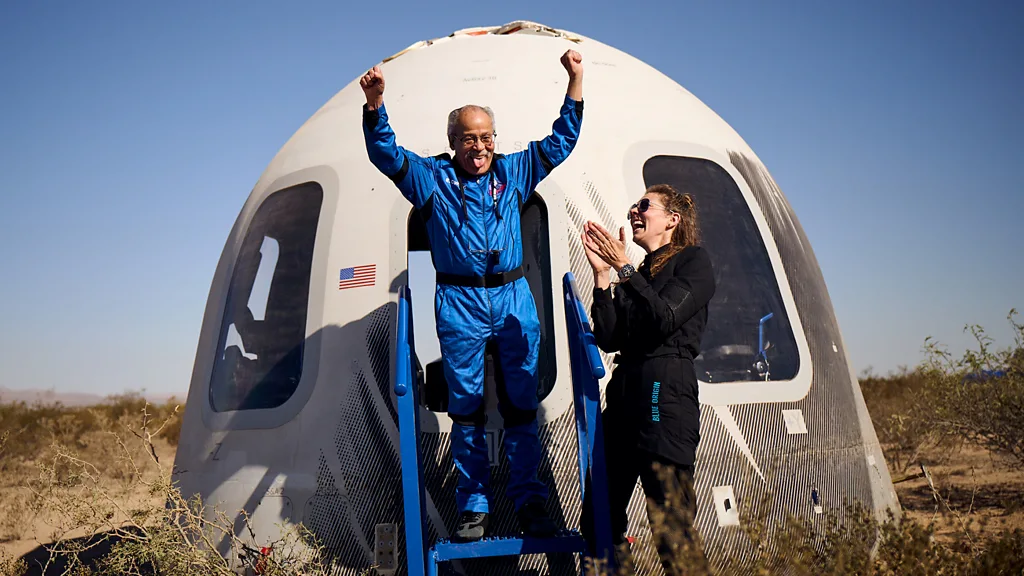
Speaking about not being able to go to space 60 years ago, Ed Dwight said, “There were dark forces that didn’t want this to happen because they thought it would taint the sacred nature of the space exploration program.” After that period, Dwight left NASA in 1966 and continued his life as an entrepreneur. About 10 years later, Dwight became a sculptor and lived a modest life. Since he could not find the opportunity to go to space with his own resources, Ed Dwight’s Blue Origin fee was paid by an organization called Space for Humanity.
This Week In Our Art Corner
How Was the ISS Built?
The International Space Station (ISS) officially began construction with the Russian-made Zarya module, which was launched into orbit on November 20, 1998. The first manned mission took place on November 2, 2000, and since then, the ISS has been continuously used for manned missions. From this date on, astronauts and cosmonauts have been conducting scientific research and various missions on the station. So, what was the construction process of the ISS like? A short animation has been made to illustrate this. You can select subtitles according to your language preference.