

Where is the Tesla Roadster Launched into Space Now?
SpaceX conducted the first launch of the Falcon Heavy rocket in 2018. During this launch, Elon Musk’s personal car, the Tesla Roadster, was sent into space. The car was attached to the top part of the rocket, and a mannequin wearing a spacesuit named “Starman” was placed in the driver’s seat. The purpose of this launch was to demonstrate that heavy payloads could be carried on future Mars missions by carrying a payload with a total weight of 1360 kg. 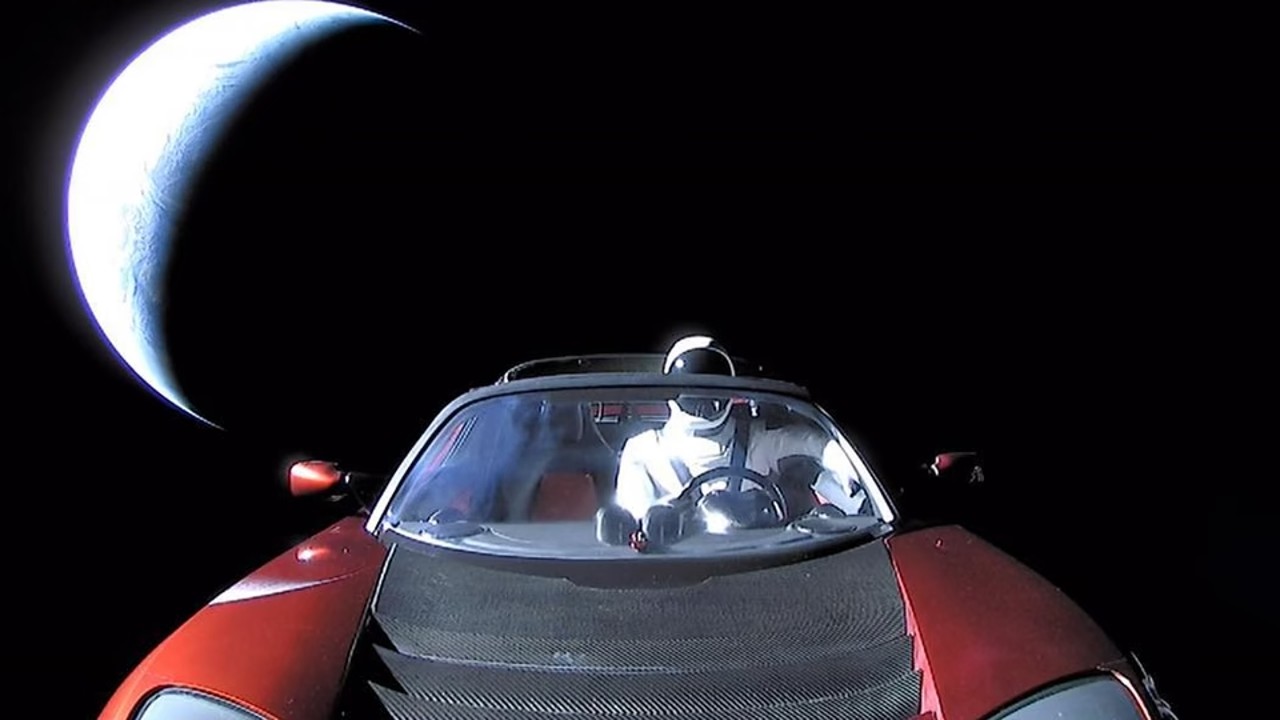
Where is the Car?
The Tesla Roadster orbits irregularly around the Sun every 557 days. According to NASA, this orbit will technically remain stable for millions of years, but the effects of the Sun and cosmic radiation, as well as micrometeoroid impacts, will likely destroy the car over time. According to astrophysicist Hanno Rein from the University of Toronto, the Roadster will either collide with Earth, Venus, or the Sun. The probability of colliding with Earth within the next 15 million years is 22%, while the probability of colliding with Venus or the Sun is 12%.
The current location of the car can be tracked using NASA data on the website www.whereisroadster.com. As of the date of this bulletin, the car is currently located 93,579,419 km from Earth, 351,230,039 km from Mars, and 165,470,446 km from the Sun. 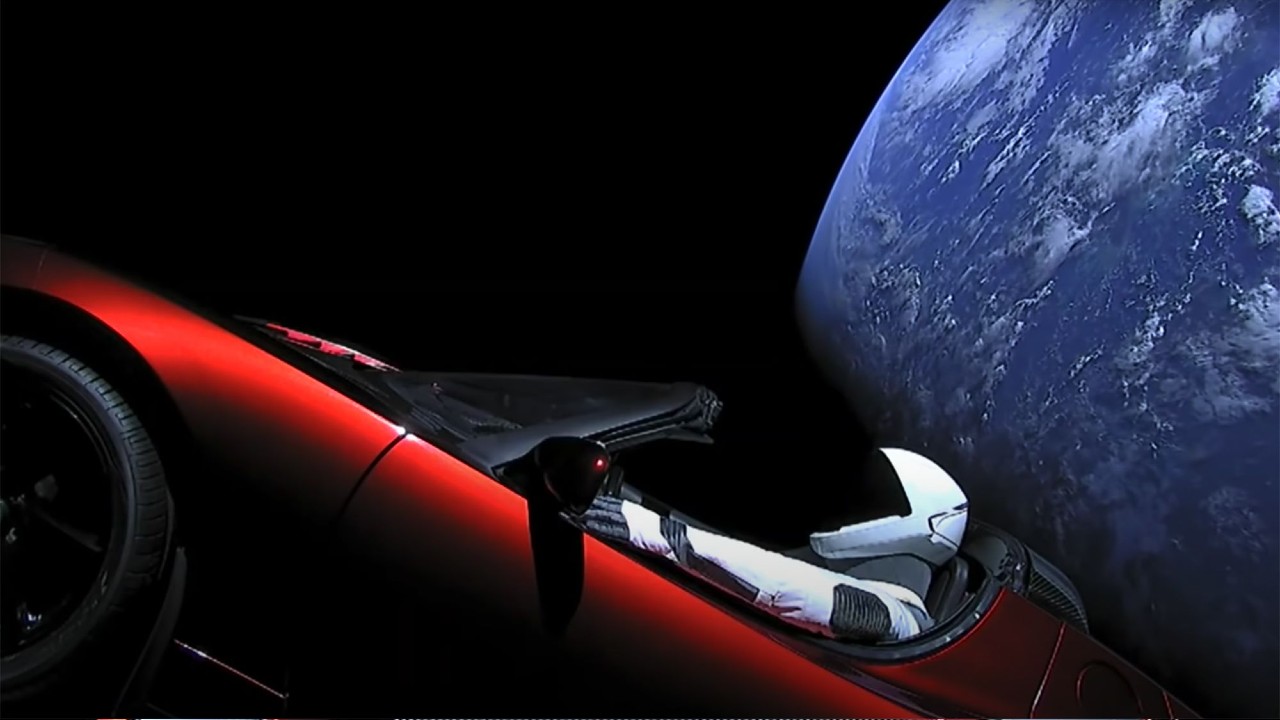
We Continue to Know Perseverance with PIXL and Mastcam-Z
In our previous bulletins, we introduced most of the scientific instruments onboard Perseverance. In this article, we will introduce the remaining two instruments, completing this series.
Mastcam-Z
Mastcam-Z is a camera system mounted on the mast of Perseverance, equipped with zooming functionality. It has the capability to zoom, focus, and capture high-speed 3D images for detailed examination of distant objects. Positioned on Perseverance’s mast, it is placed at a height of approximately 2 meters. It weighs around 4 kg and has an image resolution of 1600×1200 pixels. 
Planetary Instrument for X-ray Lithochemistry (PIXL)
PIXL is equipped with an instrument called an X-ray spectrometer, which identifies chemical elements at very small scales. PIXL also has a camera that takes close-up images of the textures of rocks and soil fragments, capable of capturing details as small as a grain of salt. These instruments are used to search for signs of past microbial life on Mars. Mounted at the end of the robotic arm, PIXL weighs approximately 6.9 kg. 
Why Can’t We Exceed the Speed of Light?
The speed of light, or the speed that photons possess, is the highest speed known in the universe, approximately 300,000 meters per second. Einstein called the speed of light the “universal speed limit.” The reason he said this is that going faster than light would violate the principle of causality. The principle of causality is based on the idea that an event or phenomenon is the cause of another event or phenomenon. Violating this principle would lead to a logical fallacy. Exceeding the speed of light would violate some fundamental energy laws.  Every particle in the universe moves within a field called the “Higgs field.” We can liken this to walking against the wind. Just as a person struggles when walking against the wind, particles also struggle when passing through the Higgs field, which gives them mass. Different types of particles interact differently when passing through the Higgs field. Therefore, some objects are heavier than others. Photons, however, do not interact with the Higgs field as they pass through it. They simply pass through it because they have no mass. Since they do not interact, there is nothing to slow them down. Therefore, they move through space at this speed without encountering any obstacles. This unimpeded speed is the maximum speed that a photon or any particle can achieve.
Based on this information, if there were a particle lighter than a photon, it could achieve a higher speed. However, there is no known such particle. Furthermore, according to this information, we can never reach the speed of light because we have mass. If we could reach this speed, time travel might even be possible. 
This Week In Our Art Corner
The Most Recent Solar Flare Brought Northern Lights to Turkey
Electromagnetic waves resulting from the largest solar flare in recent years have reached Earth. As a result, the northern lights were observed from many countries. In our country, the northern lights observed in Trabzon and Rize were observed by the sea. In this week’s art corner, we will see the northern lights observed in our country and other countries.