The Second Space Journey of Our Country Was Successfully Completed
Turkey’s second astronaut, Tuva Cihangir Atasever, became the second Turkish person to go to space aboard Virgin Galactic’s suborbital vehicle, VSS Unity. The aircraft carrying the VSS Unity suborbital vehicle took off from the Spaceport facility in New Mexico at 17:30 on June 8. The “Galactic 07” crew, which included Tuva Cihangir Atasever, also had two private astronauts from the United States and one from Italy. 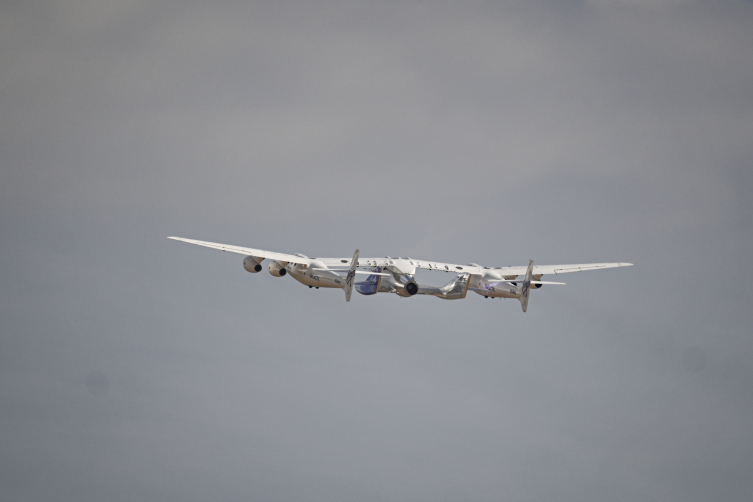 During the approximately 70-minute flight, the VSS Unity vehicle reached an altitude of 45,000 feet with the help of the carrier plane, and then ignited its hybrid rocket motor to reach an altitude of approximately 90 kilometers. Our astronaut conducted 7 scientific experiments in a microgravity environment during the approximately 3-minute free fall. The vehicle then landed at 18:40. After the landing, Atasever made a statement: “Our flight was quite successful. From the perspective of scientific experiments, I can say we achieved all our objectives.” Regarding the items he took with him, he said: “The suffering of the Palestinian people is a situation that our beautiful world does not deserve. To symbolize this, I carried a keffiyeh with me. The President gave me a watch as a gift on May 19. In addition to using it during the operations of my space journey, I also had his gift with me.”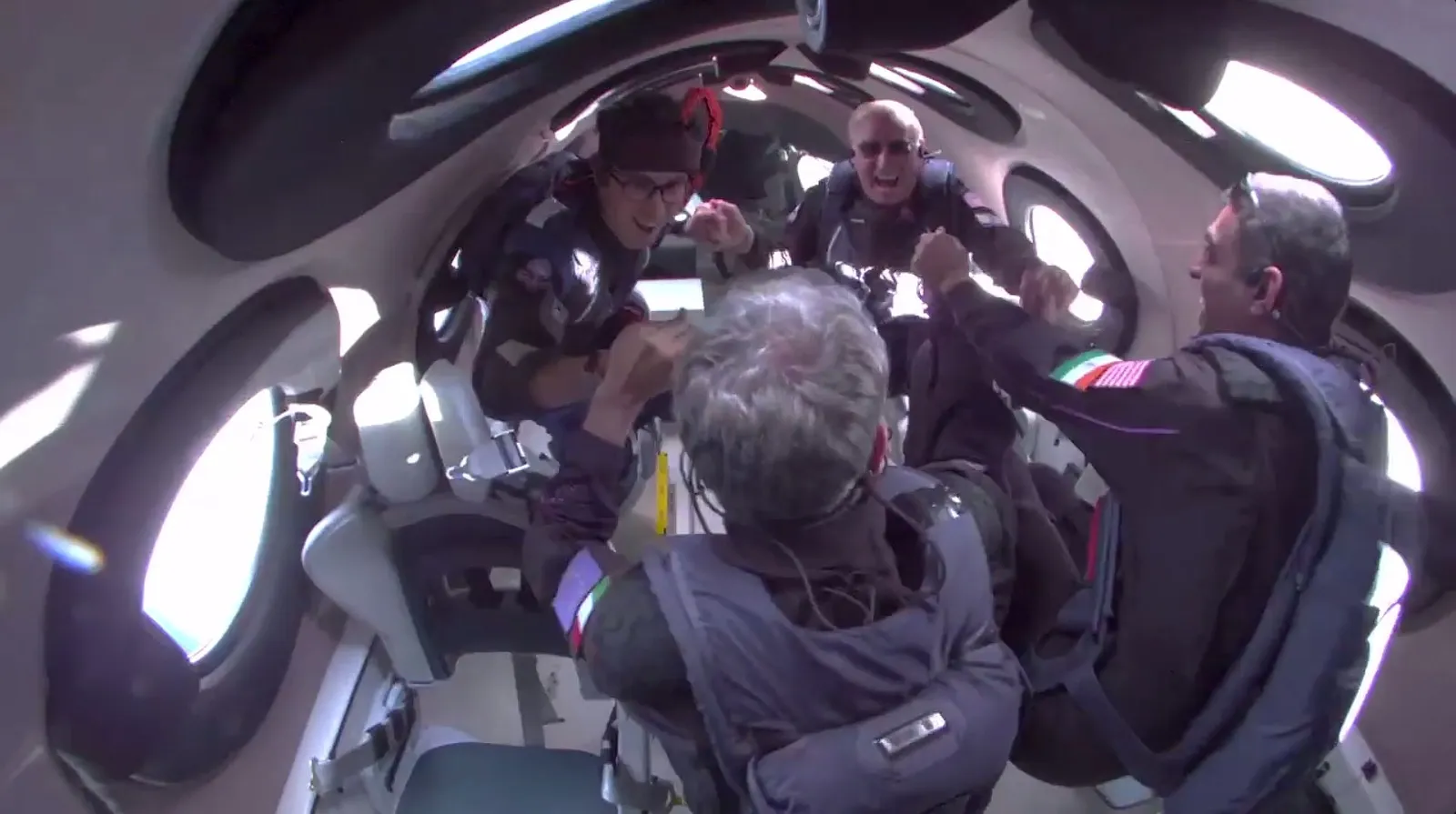
7 Scientific Experiments Conducted
During the 3-minute free fall, 7 different experiments were conducted. Atasever’s astronaut suit was specially revised to carry equipment related to 3 of the experiments. You can see brief information about the experiments in the image below. 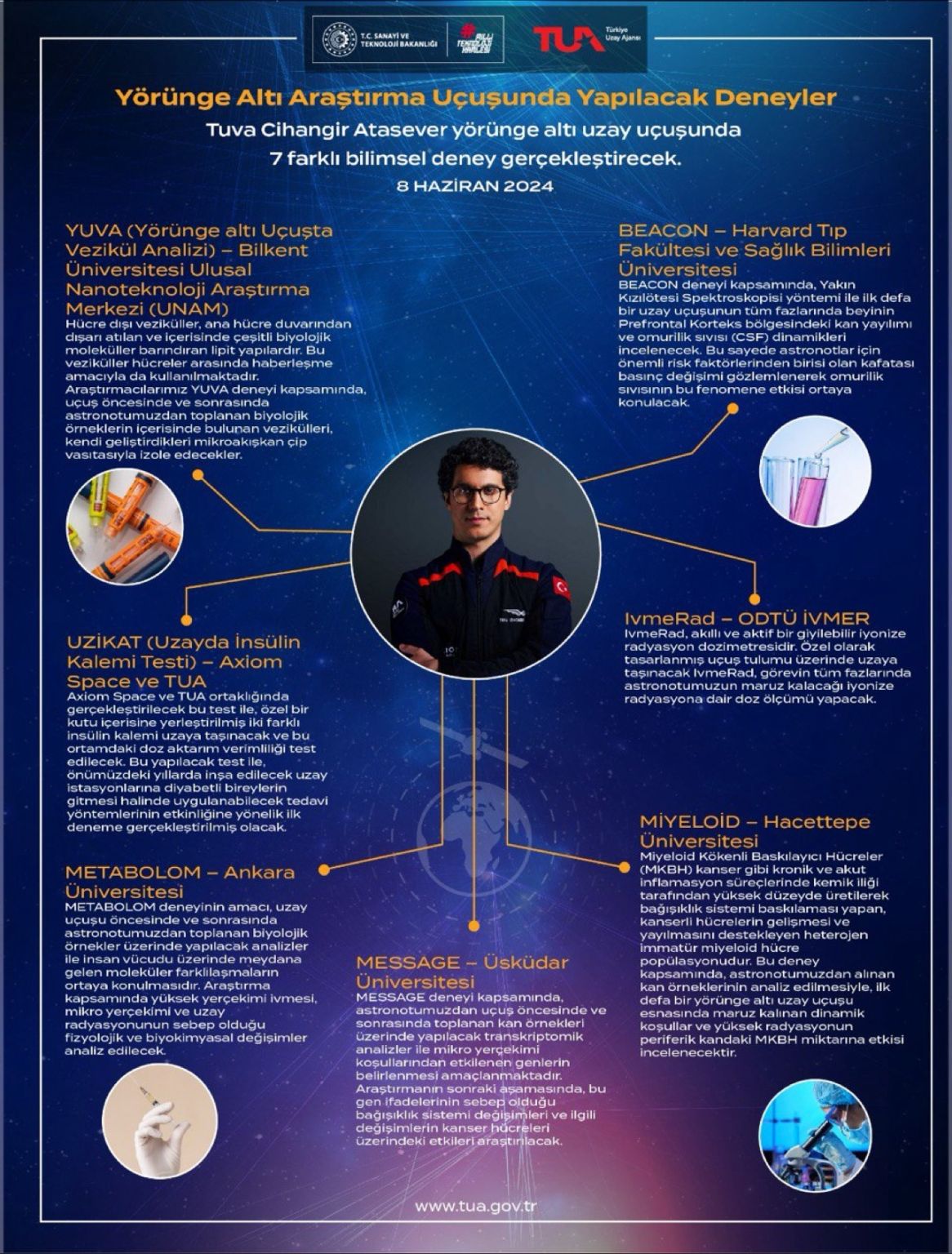
First Ice Formation Detected on a Volcano on Mars
It has been known for years that Mars’ poles contain large amounts of water ice. However, the region around the equator is a barren and dry desert, lacking surface ice. According to a recent discovery on Mars, the Olympus Mons volcano, the tallest volcano in the solar system, has been found to experience frost. However, this ice appears only briefly after sunrise and soon evaporates. Estimates suggest that there is a daily water cycle of 150,000 tons between the surface and the atmosphere. 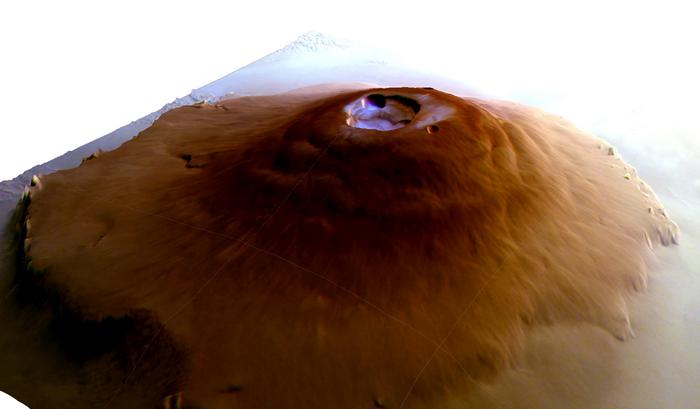 This discovery was made by a research team including scientists from Brown University and the University of Bern. They used high-resolution images from the Colour and Stereo Surface Imaging System (CaSSIS), one of the instruments on the ESA Trace Gas Orbiter. The findings were later confirmed using independent observations from the High Resolution Stereo Camera on the Mars Express Orbiter. The research team discovered deposits in the calderas (craters formed after volcanic eruptions) of the volcanoes due to frost.
 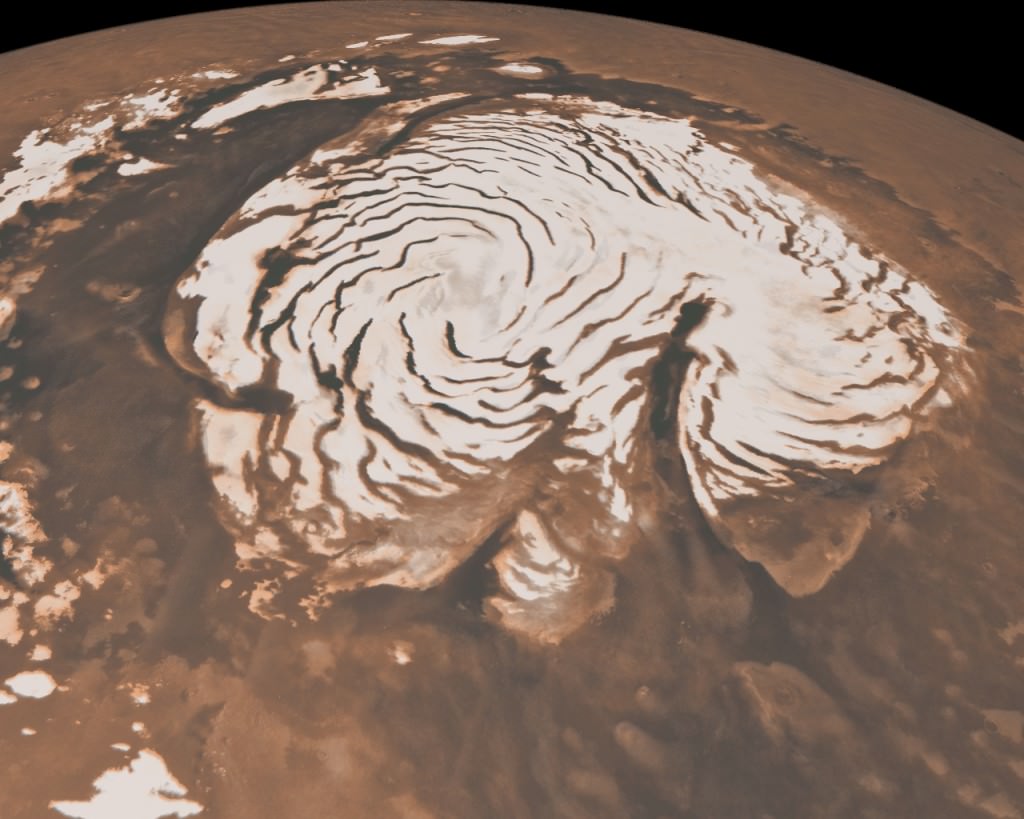 The discovery of water frost near the planet’s equator for the first time necessitates a reconsideration of our current knowledge of Mars’ climate. Until now, it was believed that frost formation around the equator was unlikely due to high levels of solar radiation and a thin atmosphere. These conditions imply that surface temperatures, even at the peaks of the volcanoes, would be too high for frost to form.
New Starlink Satellites Are Placed at Lower Altitude
There are currently more than 5000 Starlink satellites in space, and this number is intended to increase further. SpaceX CEO Elon Musk said a while ago that the new Starlink satellites will be at a lower altitude to reduce network latency and ensure that satellite internet performs like terrestrial broadband. 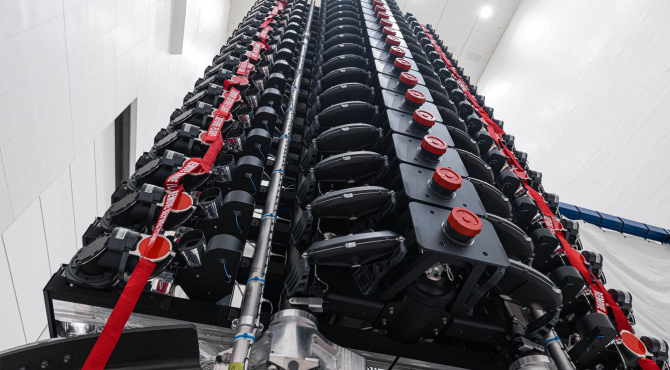 The latency of a correct internet connection should be less than 20 milliseconds so that the connections can be functionally real-time. In the current state of Starlink satellites, this latency is not ideal. This causes problems in uses that require instantaneous lag-free internet, such as video chat and online games. Elon Musk said SpaceX will address the latency issue with its next satellite redesign, which will orbit at 350 kilometers (217 miles) instead of 550 kilometers (341 miles). SpaceX recently announced that it reached an average latency of 28 ms. But feedback from users says this is still not enough.
 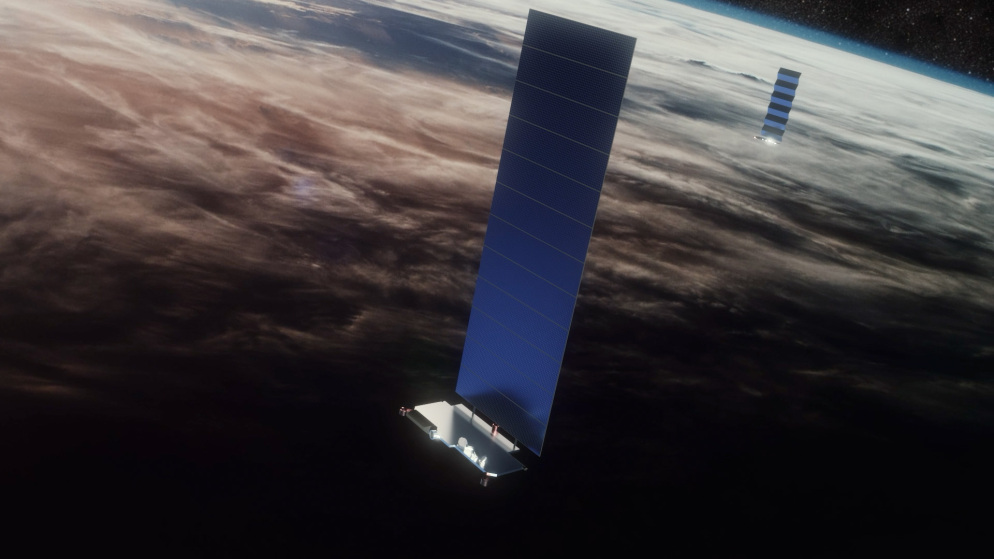 Placing satellites at a lower altitude is a good solution in theory, but it is thought to take a long time to implement. It is stated that many missing parts need to be completed before implementation can begin.
This Week In Our Art Corner
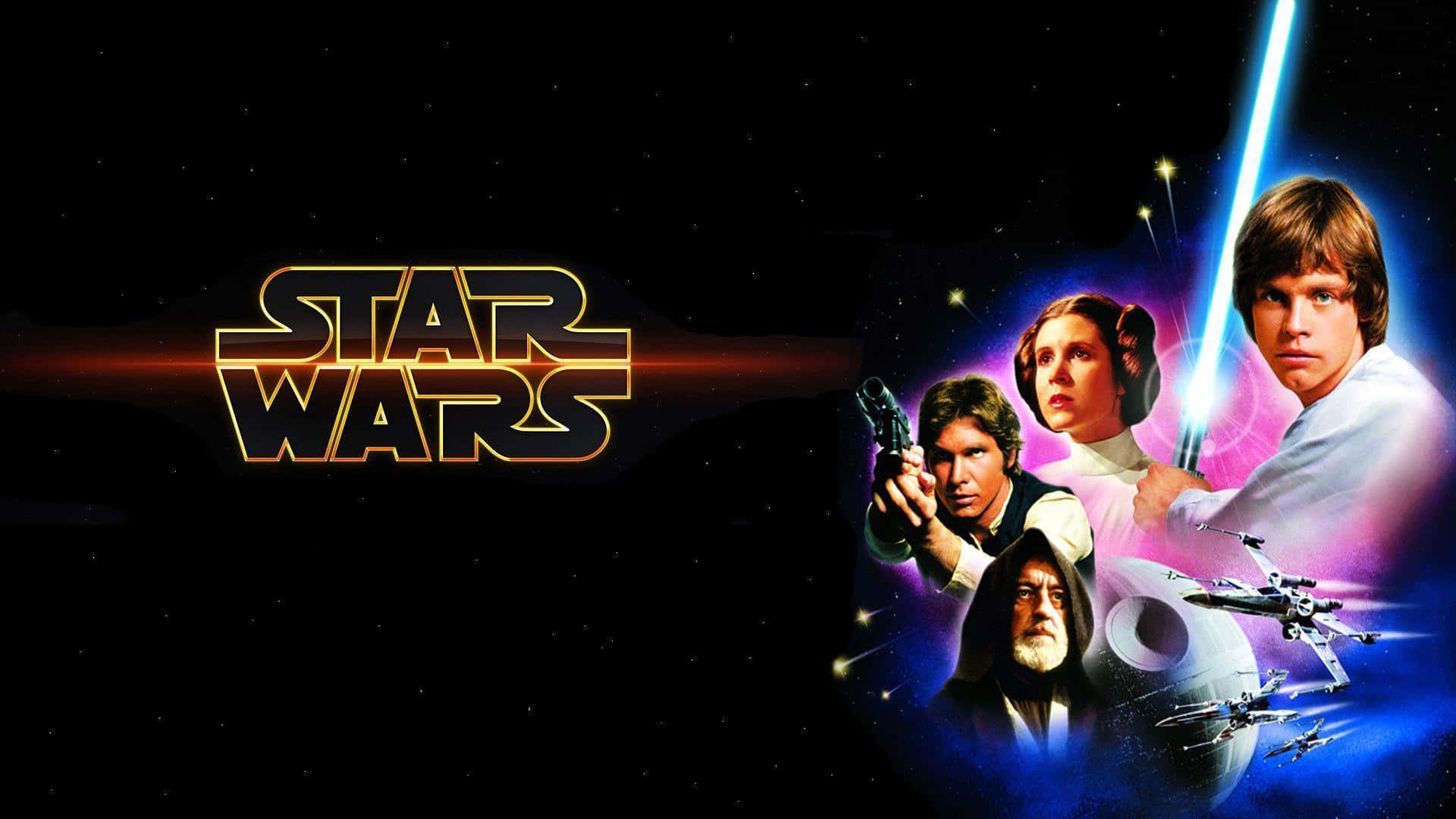
Star Wars, created by George Lucas, is a fictional universe and franchise primarily known for its films, which have gained worldwide popularity since the release of the first film under the title “Star Wars” on May 25, 1977. Over the years, it expanded into various media such as comic books, video games, television productions, and more. Following the original trilogy, the narrative was expanded with a prequel trilogy, which chronologically precedes the events of the original films. With a multitude of characters and settings, the series’ events unfold along its own historical timeline within the fictional universe.
Thanks to its original concept and successful continuity, the series continues to captivate audiences, with each viewing revealing new details. Once you start watching, you’ll find it impossible not to be drawn into this fictional universe. If you haven’t watched it before, we highly recommend giving it a try.