NASA’s Mini Rover Team is Ready for the Moon Journey
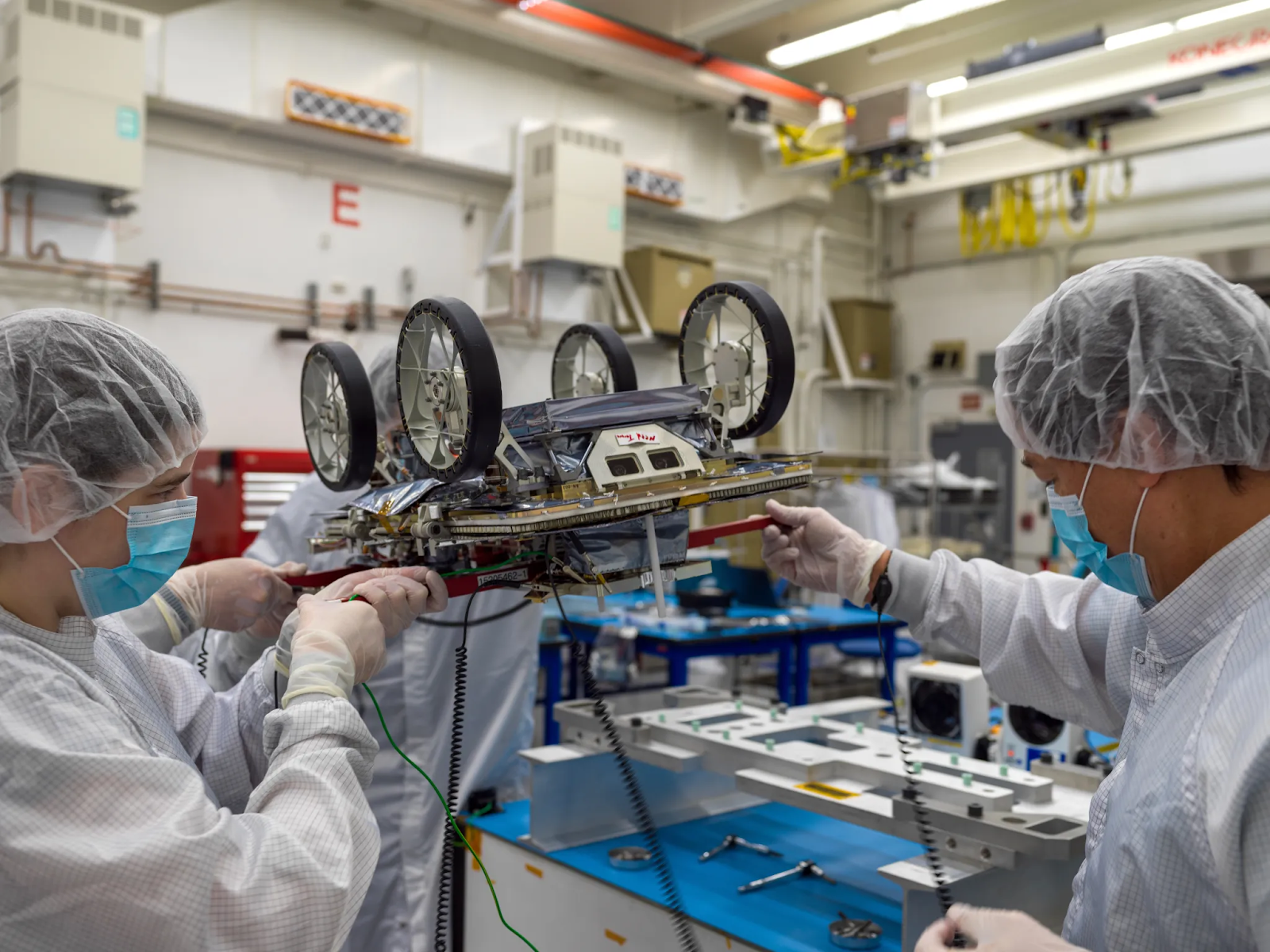
NASA’s Jet Propulsion Laboratory (JPL) team has packed three small rovers to explore the Moon’s surface and deliver them for launch preparations. Developed under the CADRE (Cooperative Autonomous Distributed Robotic Exploration) project, these autonomous robots will independently navigate the Moon’s surface while collecting scientific data. Equipped with cameras and radar systems, they will examine both the surface and subsurface, working together without direct commands from Earth’s control center. These rovers will be sent to the Moon under NASA’s CLPS (Commercial Lunar Payload Services) program and will be delivered to the Reiner Gamma region via Intuitive Machines’ Nova-C lander. They will operate for approximately 14 Earth days, equivalent to one lunar day.
Completed in February 2024, the rovers were carefully placed in protective cases and securely transported to Intuitive Machines’ facility in Houston for integration with the lander. Once on the Moon, they will test cooperative exploration, paving the way for future multi-robot systems on the Moon and other planets. NASA’s Glenn and Ames Research Centers provided technical support, while Motiv Space Systems produced the hardware components, and Clemson University contributed with research. This innovative project is one of NASA’s many technological advancements aimed at establishing a permanent presence on the Moon.
Nuclear Fuel Testing for Space Missions
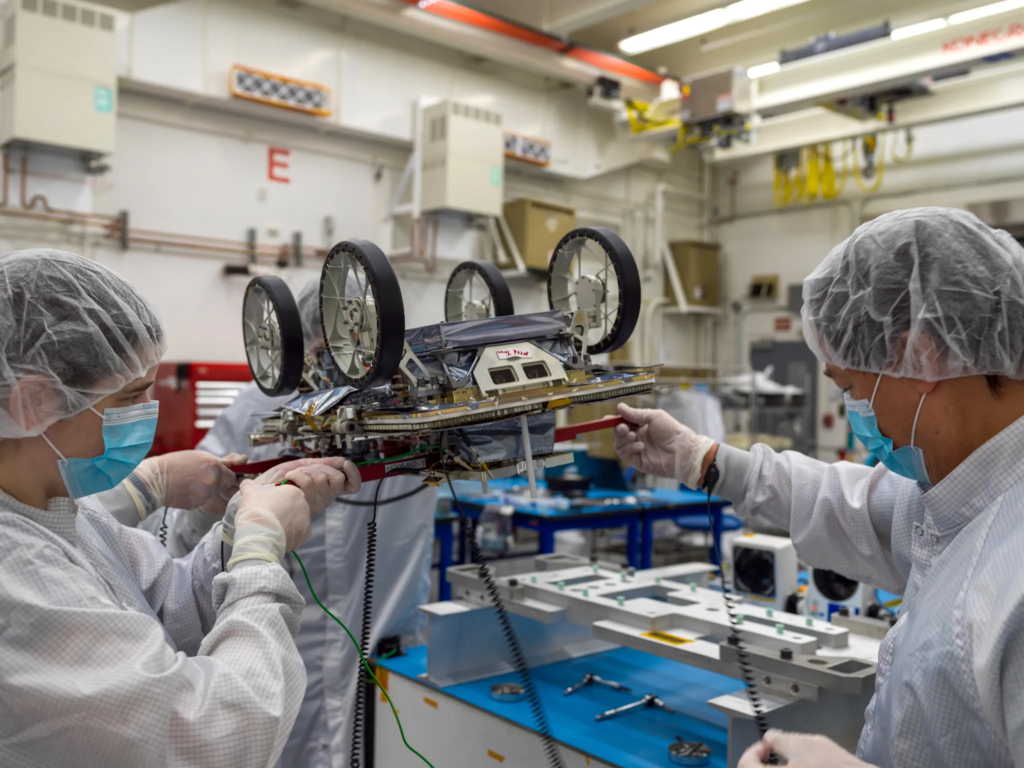
NASA and General Atomics have conducted a significant test on Nuclear Thermal Propulsion (NTP) technology to make deep space travel more efficient. The tests carried out at the Marshall Space Flight Center, examined the durability of a new nuclear fuel under space conditions. During testing, General Atomics subjected fuel samples to six thermal cycles, heating them with hot hydrogen to temperatures of up to 2600 Kelvin. The positive results indicate that this fuel could be a safe and reliable option for future space missions to destinations like the Moon and Mars.
The tests confirmed that nuclear thermal rockets could be two to three times more efficient than current chemical-fueled engines. NASA aims to use this technology to shorten the duration of human missions to Mars, increasing astronaut safety. Additionally, nuclear propulsion could allow spacecraft to carry more materials, enhancing the sustainability of long-duration space missions. NASA and DARPA plan to test this technology by 2027, marking a major step toward human exploration of Mars.
A Record-Breaking Fast-Moving Planetary System in the Milky Way
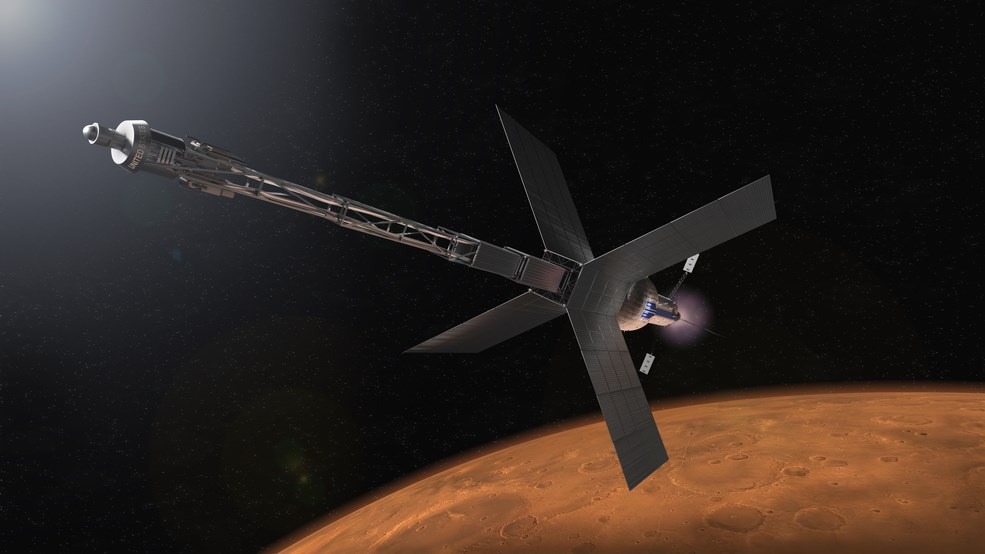
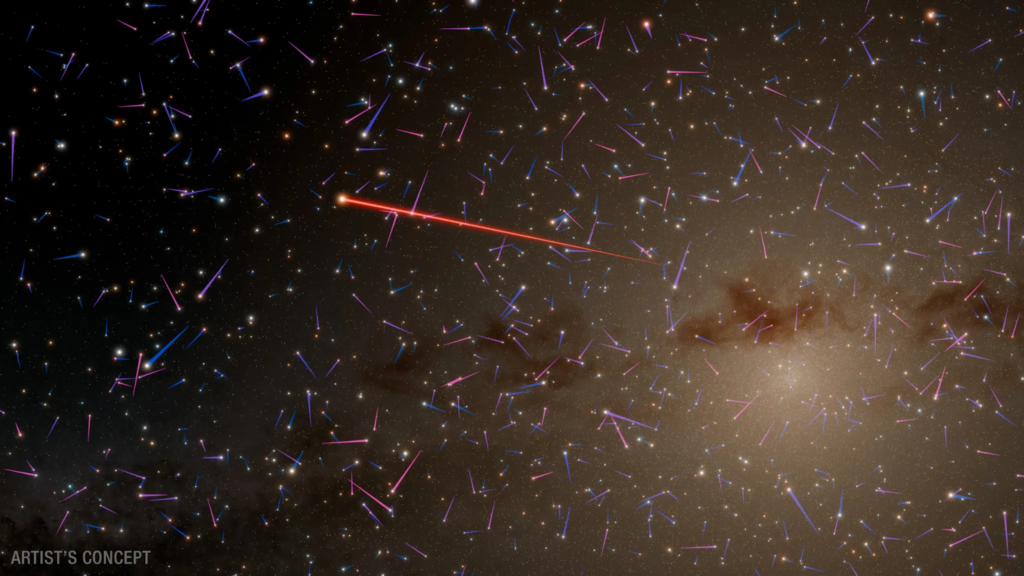
NASA scientists may have discovered an extraordinary planetary system moving at an incredible speed near the center of the Milky Way. Estimated to be traveling at about 1.2 million miles per hour (540 km/s), this system has the potential to be the fastest exoplanetary system ever discovered. Researchers believe it contains a “super-Neptune” orbiting a low-mass star. If confirmed, this discovery could provide valuable insights into whether hypervelocity stars can host planets. The findings were published in The Astronomical Journal by a team led by Sean Terry from NASA’s Goddard Space Flight Center and the University of Maryland.
This celestial pair was first detected in 2011 using the microlensing method, which relies on the gravitational bending of light from a background star. Scientists analyzed data from the Keck Observatory and the European Space Agency’s (ESA) Gaia satellite to determine the exact masses of the system’s components. Results suggest that the system is about 24,000 light-years away, located in the dense central region of the galaxy. If this system exceeds the Milky Way’s escape velocity, it could eventually be ejected into intergalactic space over millions of years. NASA’s upcoming Nancy Grace Roman Space Telescope will help scientists determine how common such fast-moving planetary systems are and uncover the mechanisms behind their acceleration.
This Week’s Art Corner: Istanbul Toy Museum
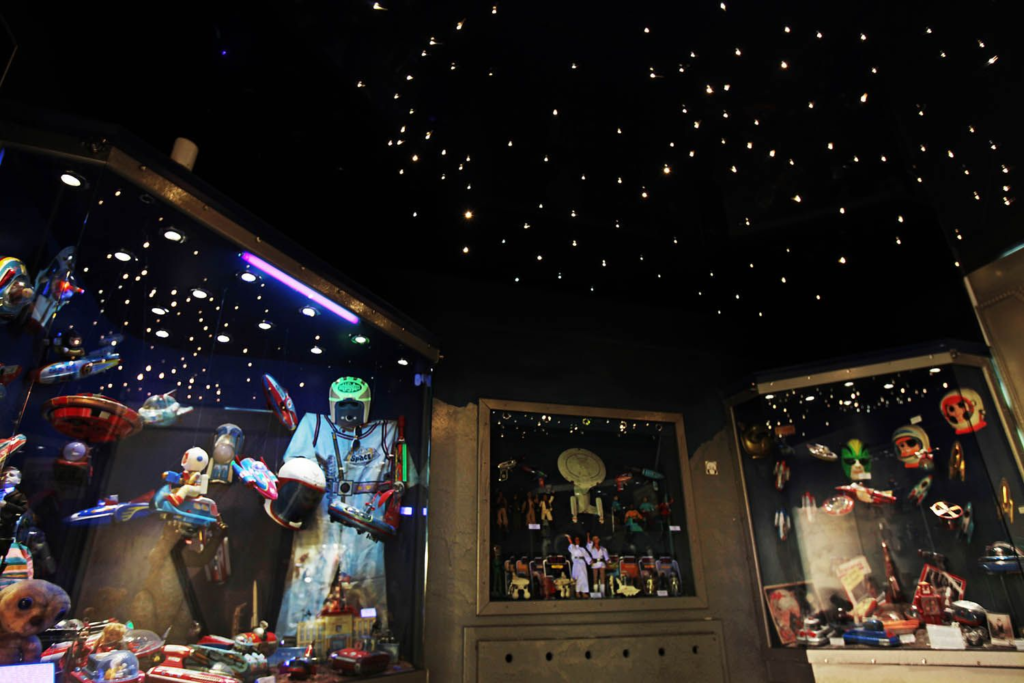
We recommend visiting the Istanbul Toy Museum this week in our art corner. Featuring an extensive collection of toys dating back to the 1700s, the museum is designed with themed rooms that immerse visitors in different eras and cultures. One of its most captivating sections is the space-themed room, which vividly showcases humanity’s journey to the Moon and space exploration through toys from different decades. This section includes space-themed toys produced as early as the 1920s, providing a fascinating look at how the Moon landing influenced the toy industry. If you are interested in history, science, and nostalgia, this museum offers a unique experience that blends education and entertainment.