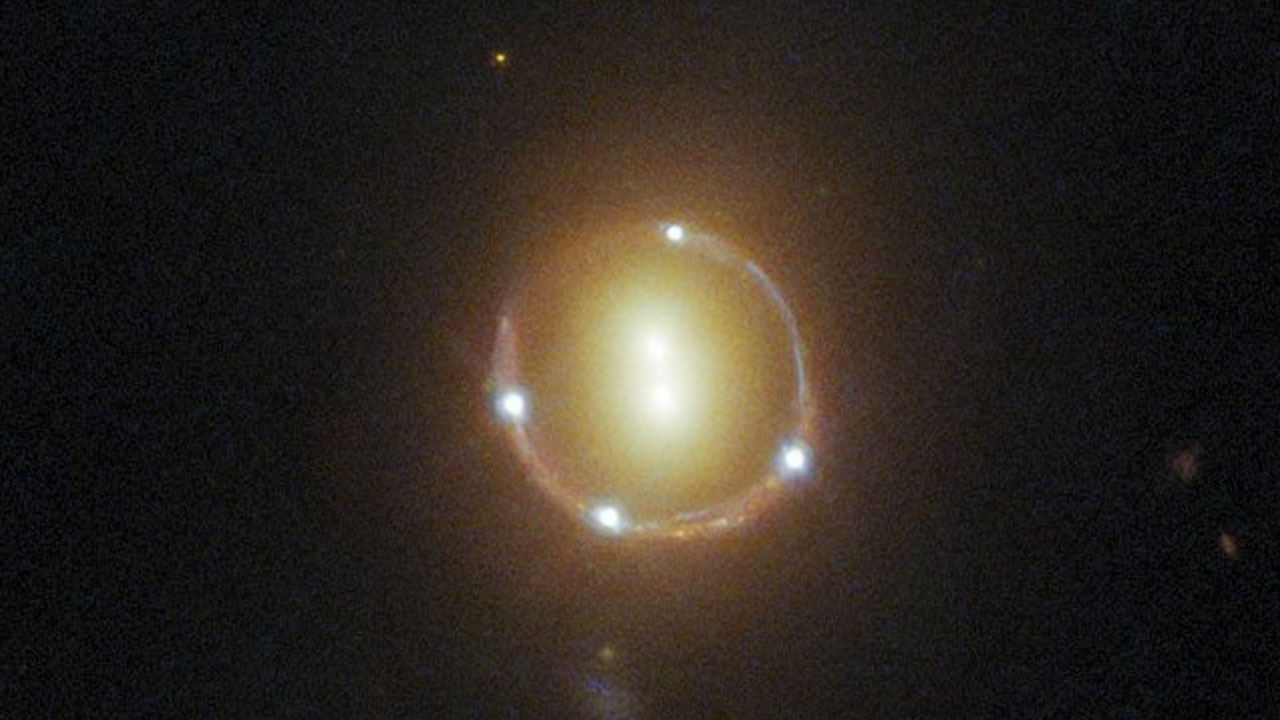
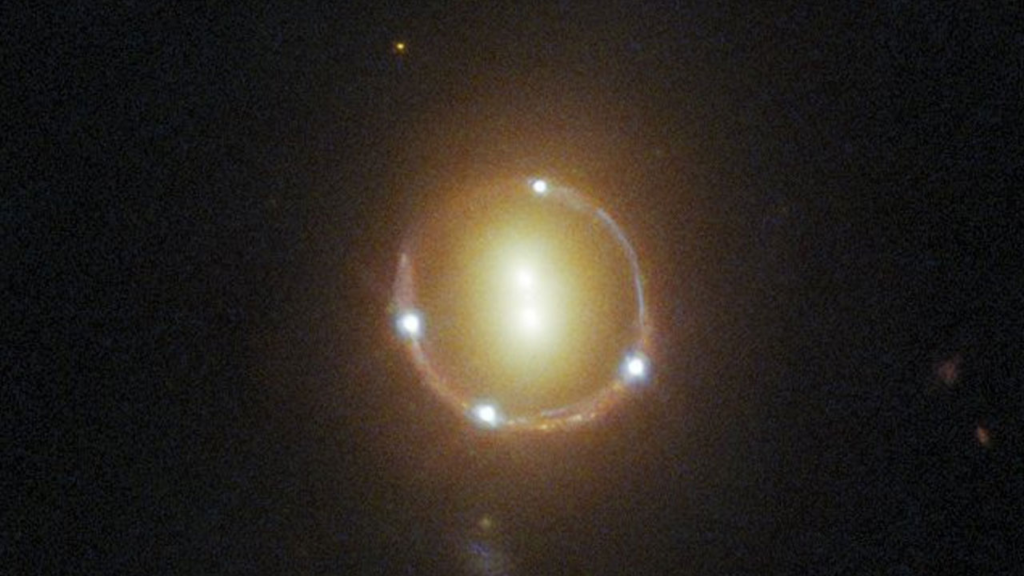
Astronomers Discover a Perfect ‘Einstein Ring’ in Space
Astronomers have discovered a nearly perfect Einstein ring surrounding the galaxy NGC 6505, located just 590 million light-years away. This phenomenon is one of the rarest and most intriguing cosmic events and was identified using data from the Euclid space telescope. An Einstein ring forms through a process known as strong gravitational lensing, where a massive object bends light, magnifying and distorting the image of a more distant light source. In this case, the ring was created when light from a distant galaxy was warped by the gravitational influence of NGC 6505.
Observing such a perfectly formed Einstein ring is extremely rare, making this discovery a unique opportunity for scientists to study the distant universe. The ring displays multiple bright spots where the background galaxy’s light is magnified and duplicated. Euclid’s ability to detect such an example highlights the telescope’s potential for investigating dark matter and dark energy—two of the most mysterious components of the universe. This discovery not only demonstrates Euclid’s power but also opens the door to studying previously unseen galaxies, further advancing our understanding of the cosmos.
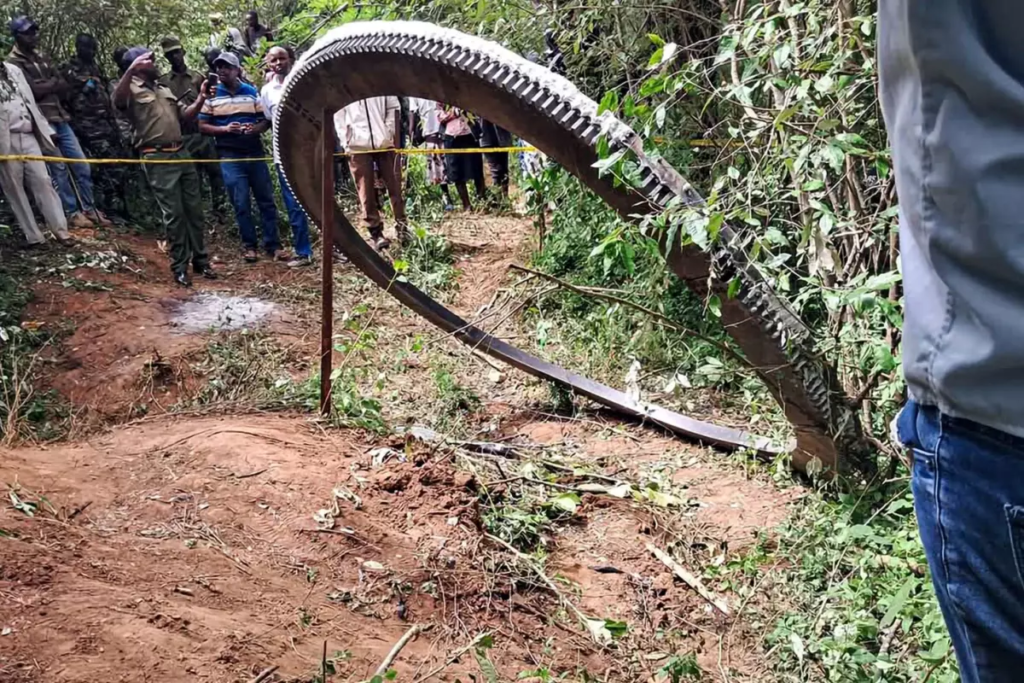
Giant Space Debris That Crashed into Village in Kenya Under Investigation
The Kenya Space Agency (KSA) has begun investigating a giant metal ring that fell into the village of Mukuku in the southern part of the country. Weighing approximately 500 kilograms and measuring 2.5 meters in diameter, the object is believed to be a piece of a rocket left behind during a stage separation. Local residents reported that the object fell rapidly from the sky and was still hot upon impact. Normally, debris from space burns up in Earth’s atmosphere or falls into uninhabited areas like oceans. However, this incident highlights the potential risks that space debris poses to populated areas. KSA officials have secured the debris and begun analyses to determine which space mission it originated from.
Space debris has become an increasingly significant problem in recent years due to the rise in satellite launches. According to the European Space Agency (ESA), more than 14,000 tons of debris are currently orbiting in low Earth orbit, posing threats to active satellites, astronauts, and even settlements on Earth’s surface. At a United Nations meeting in October, experts emphasized the urgent need for space traffic management and improved debris tracking systems. The recent incident in Kenya could push space agencies and international organizations to take more effective measures. The KSA has announced that it will collaborate with relevant institutions to identify the source of the debris and handle the process under the framework of International Space Law.
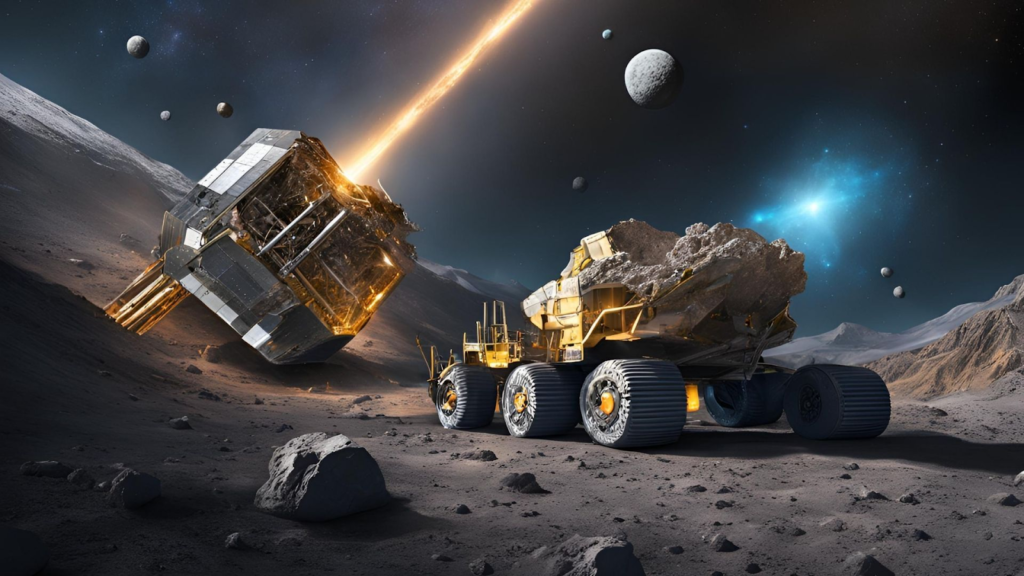
Space Mining in 2025
The year 2025 is expected to be a turning point for space mining, with both private companies and government-backed space agencies accelerating projects aimed at extracting rare metals and water from asteroids. NASA and the European Space Agency (ESA) are developing new exploration vehicles to mine lunar water ice and rare minerals found in lunar regolith, while private enterprises are working on robotic probes capable of enabling commercial mining operations. One such mission is the launch of the Vestri spacecraft, planned for 2025, which aims to be among the first to extract materials from space.
The economic potential of the space mining industry is also expanding rapidly. The market, valued at $500 million in 2017, is projected to reach $2.84 billion by 2025. This growth is driven by technological advancements and the increasing scarcity of natural resources on Earth, which makes alternative solutions more urgent. Space-mined platinum, nickel, and rare earth elements could revolutionize industries such as electronics and energy. Additionally, the extraction of water for conversion into hydrogen and oxygen as a fuel source would provide a crucial advantage for long-term deep-space exploration. By 2025, space mining is set to evolve from a theoretical concept into a tangible industry that supports humanity’s sustainable development goals.
This Week in Our Art Corner: Elio (2025)
This week in our art corner, we have the film Elio, which is set to be released on June 13, 2025. The story follows 11-year-old Elio, who is accidentally abducted by aliens and unexpectedly chosen as Earth’s galactic ambassador. Suddenly finding himself in a world full of extraterrestrials, Elio is faced with the enormous responsibility of representing his planet. This adventure not only enables him to communicate with aliens but also leads him on a profound journey of self-discovery and understanding how to stand up for his world. The film explores universal themes such as courage, friendship, and identity in a fun and thought-provoking way. With its visually stunning animation, Elio promises an extraordinary space adventure for both children and adults.