NASA Has Detected the Problem on Voyager 1
As mentioned in our previous bulletins, Voyager 1, the farthest object of humanity, continues its journey 24.3 billion kilometers away from Earth, and communication has been unavailable for months. Initially detected on November 14, 2023, it was announced that a healthy communication with Voyager 1 could not be established due to a computer malfunction. According to a new announcement by NASA, NASA engineers have identified the cause of the strange anomaly and now believe they can solve the problem. Engineers suspect that the computer’s normal operations are hindered by sending meaningless data due to faulty memory hardware in the Voyager 1 spacecraft’s Flight Data System (FDS). 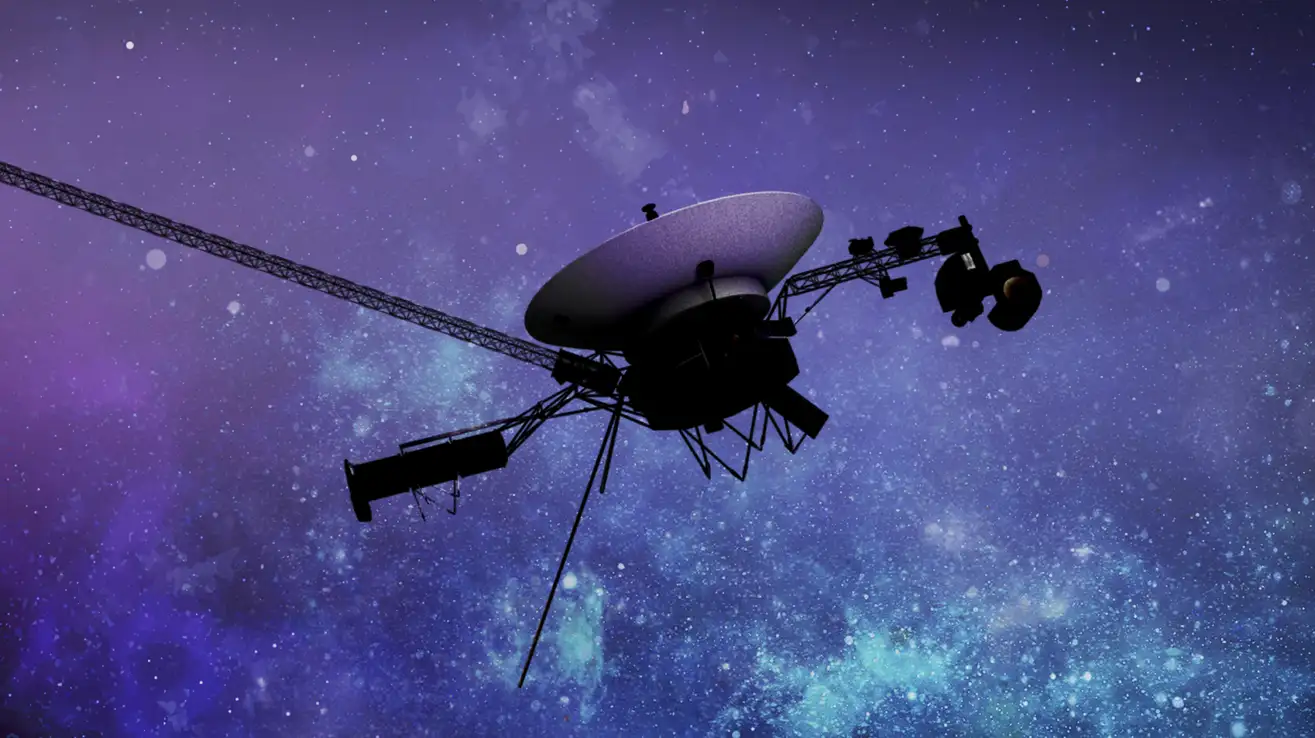 The FDS is responsible for collecting science and engineering data from the spacecraft’s sensor array and then combining this information into a single data packet in binary code format (series of ones and zeros). Engineers suspect that a portion of the affected FDS memory is not functioning properly, likely due to a malfunctioning chip responsible for storing part of it. Engineers cannot definitively determine the cause of the problem. Two possibilities are being considered: the chip may have been struck by an energetic particle from space or it may have worn out after 46 years. Despite the lengthy process, engineers are hopeful about solving the problem. The team is working to find a way for the FDS to function normally without faulty memory hardware. Launched in 1977, the twin Voyager spacecraft flew past Saturn and Jupiter, while Voyager 2 flew past Uranus and Neptune. Both are exploring interstellar space beyond the heliosphere, the bubble of particles and magnetic fields created by the Sun. Voyager 2 continues to operate normally.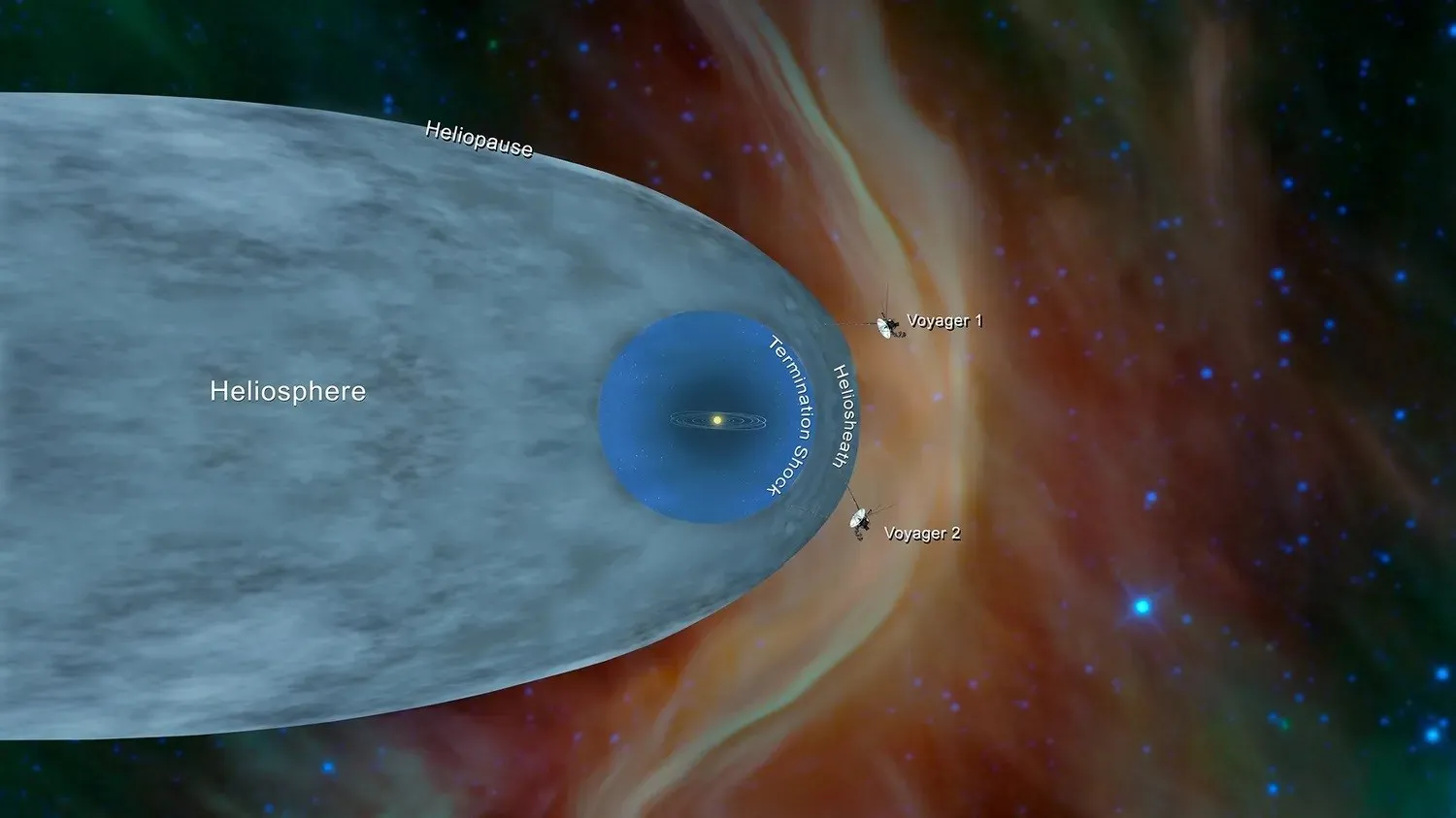
The Parker Solar Probe Observed the Inside of a Solar Flare
Solar flares, which we occasionally touch upon in our bulletins, typically occur in relatively cooler regions of the Sun. During solar flares, vast amounts of plasma are ejected into space. If these plasmas interact with Earth’s magnetic field, a solar flare occurs. Some solar flares that have occurred in the past have led to phenomena such as disruption of radio signals. NASA’s Parker Solar Probe, launched into space in 2018, flew through the Sun’s outer atmosphere known as the corona and approached the Sun for the first time. The spacecraft earned the title of the human-made object closest to the Sun on October 29, 2018. Parker managed to capture the interior of a solar flare, known as a coronal mass ejection (CME), for the first time. With its advanced sensors, it was able to record the swirling motions inside the flare. Physicists will be able to delve into more detailed examinations than ever before thanks to this development. 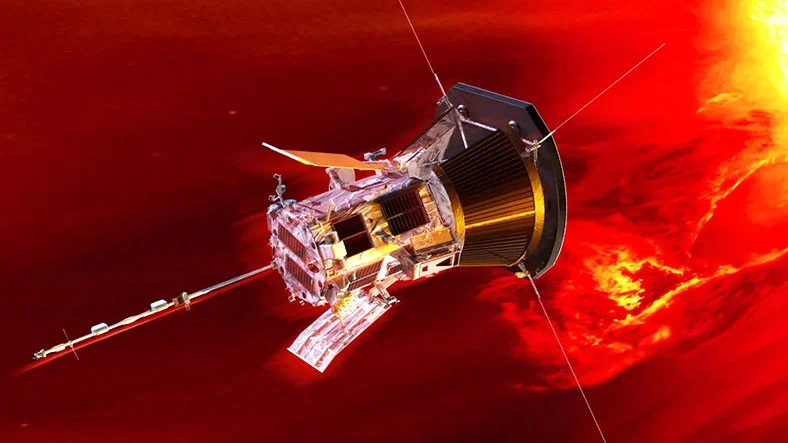 Announced in 2009, the Parker Probe project has a budget of $1.5 billion. The spacecraft is the first NASA space probe to bear the name of a living person, honoring physicist Eugene Newman Parker, a distinguished professor at the University of Chicago.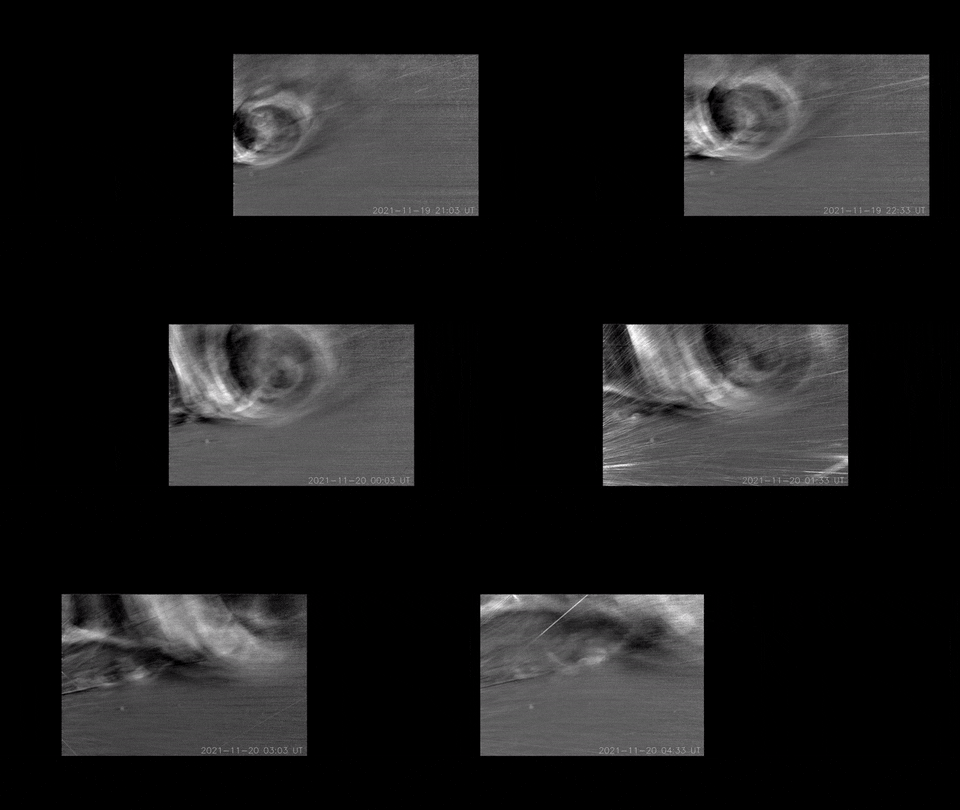
A Rainbow Was Seen On A Planet 637 Light Years Away From Earth
The phenomenon previously seen only on Venus, known as a halo effect, denotes the arrangement of colored and concentric light rings resembling a rainbow. This occurs when the light from the star around which the planet orbits is reflected by clouds made entirely of homogeneous matter. Researchers infer this from signals coming from the gas giant WASP-76b, located 637 light-years away from Earth. Discovered in 2013, this exoplanet is approximately 1.8 times the size of Jupiter but has only 92% of its mass. 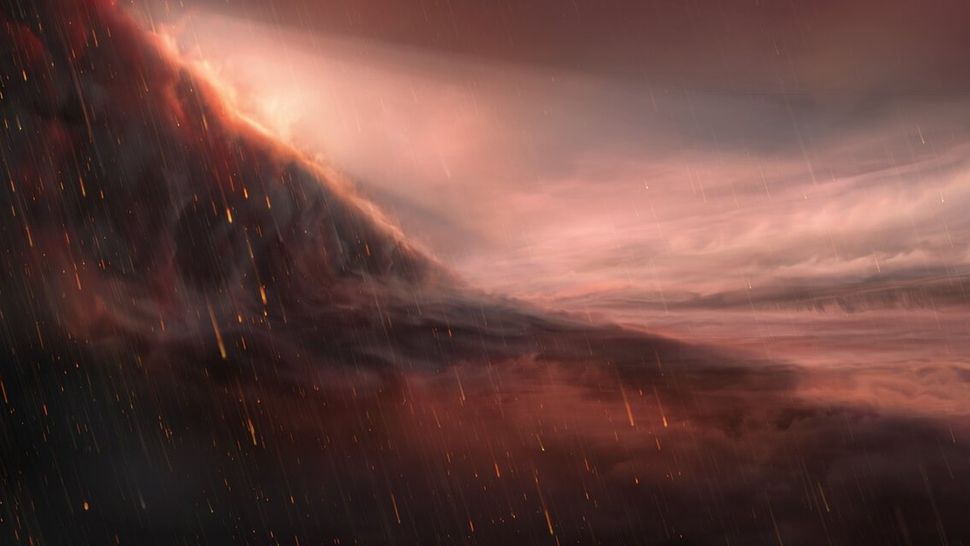 The daytime side of the planet, always facing its star, reaches temperatures of up to 2400 degrees Celsius. After iron vaporizes at this temperature, strong and fast winds carry it to the cooler night side of the planet, where it condenses into droplets and rains down as iron rain. If this observation made by the Characterizing Exoplanet Satellite (CHEOPS) of the European Space Agency is confirmed, it will be the first time this phenomenon has been detected outside the Solar System. Launched in 2019, CHEOPS observed WASP-76b 23 times over a three-year period.
 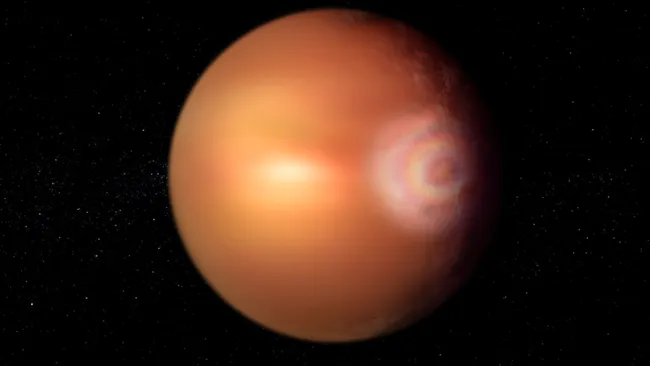 Olivier Demangeon, one of the authors of the study published in the journal Astronomy & Astrophysics, said, “The reason why halos have never been observed outside our solar system is that this phenomenon requires very special conditions. First of all, atmospheric particles must be almost perfectly spherical, completely homogeneous, and stable enough to be observed for a long time. These droplets must be directly illuminated by the host star of the planet, and the observer (in this case, CHEOPS) must be in the right position.”
Confirmation of the halo effect indicates that clouds consisting of perfectly spherical droplets have existed for at least three years or have been replenishing themselves.
This Week in Our Art Corner
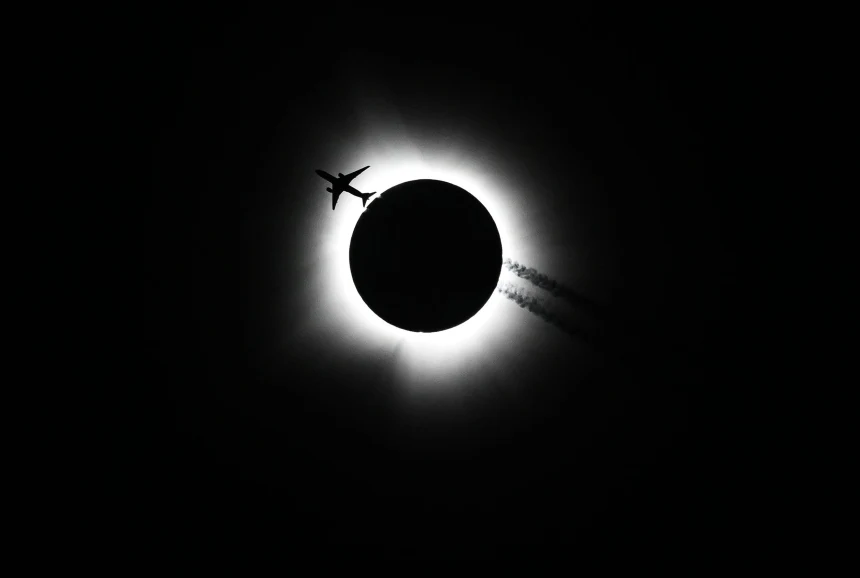
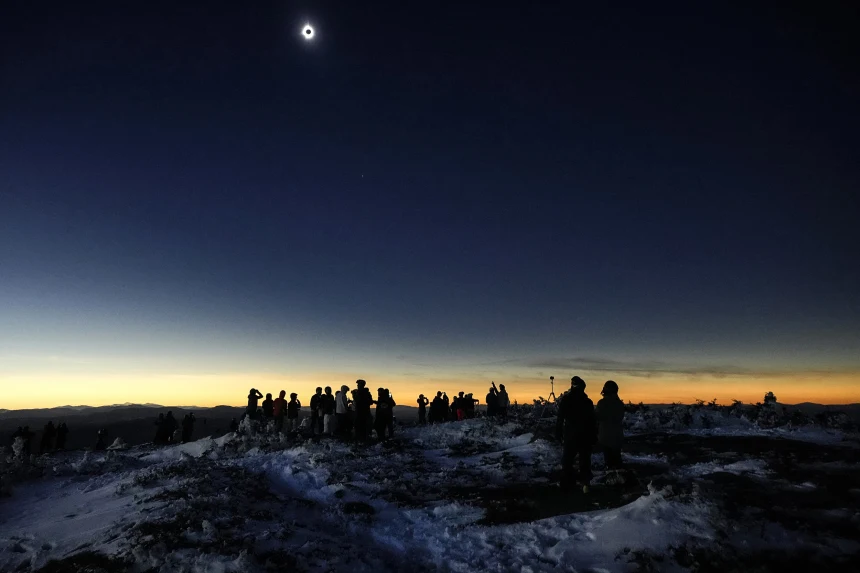
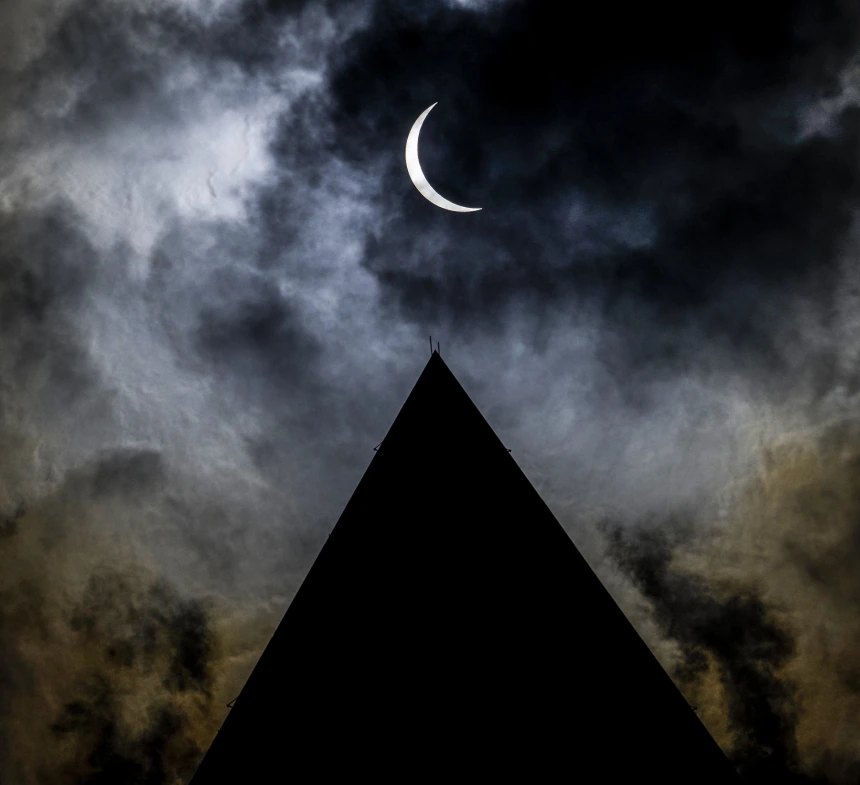
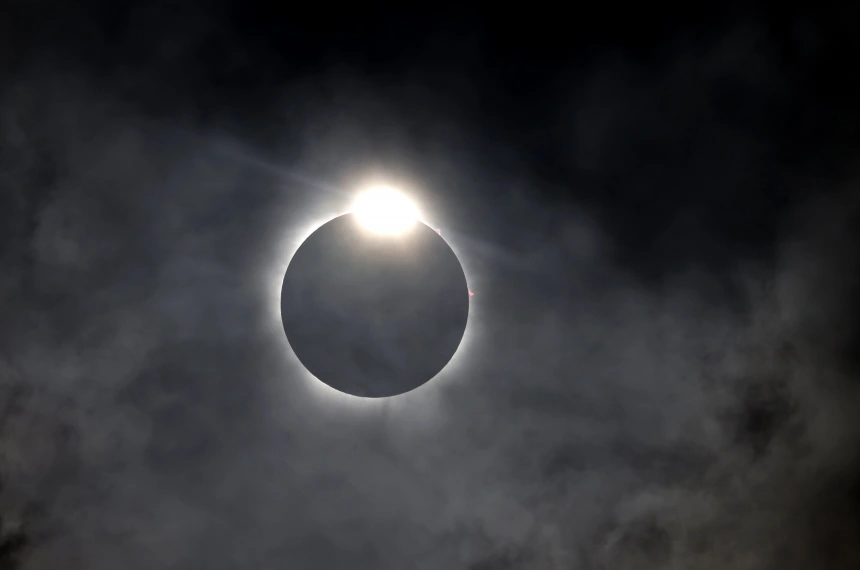
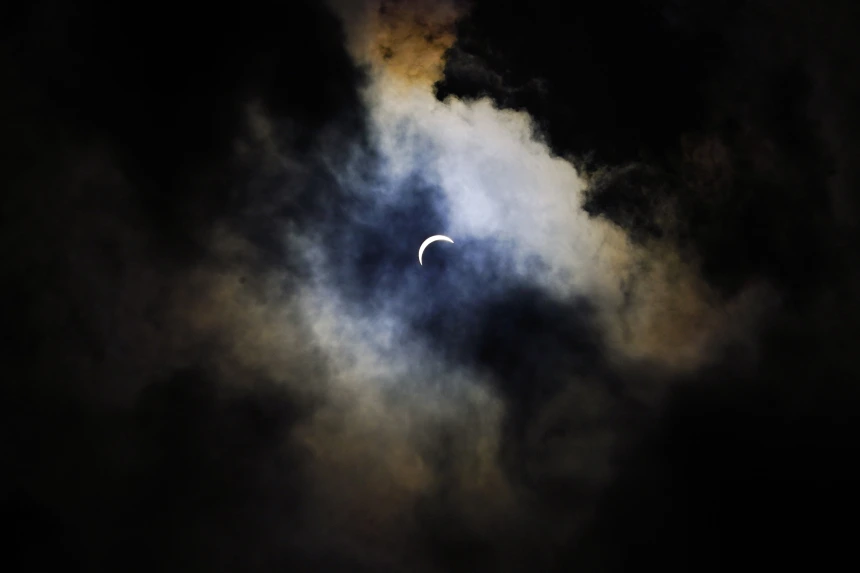
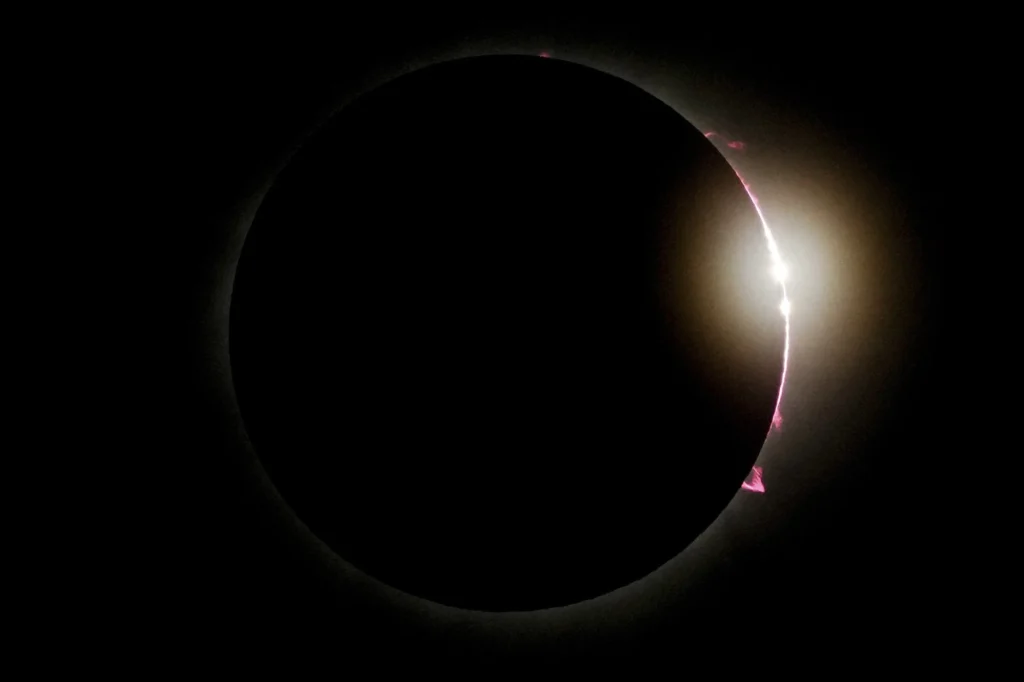
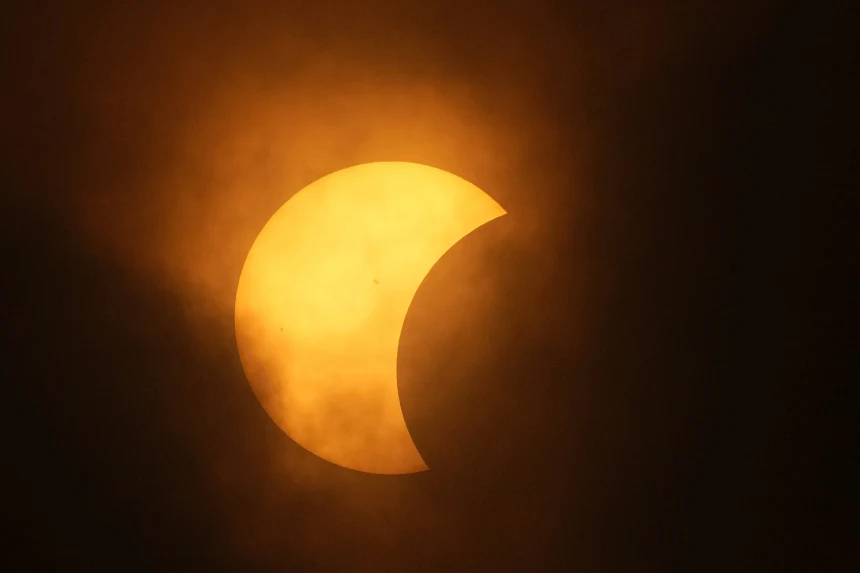
In this week’s art corner, we will see some photos taken from the recent solar eclipse.